This portfolio
The site you are reading. It is server-rendered with Next.js, so every page arrives as finished HTML for readers and search engines, and its motion runs on CSS that follows the scroll.
- Role
- Solo: design and code
- Year
- 2024, redesigned in 2026
- Platform
- Web, desktop and phone
- Hosting
- Vercel
Features
Pages
- A home page with About, Experience, Work, Skills and Contact.
- A case study for each project, with its features, screenshots, decisions and stack.
- Every page is built ahead of time. Adding a project to the data creates its page, social image and sitemap entry.
Motion
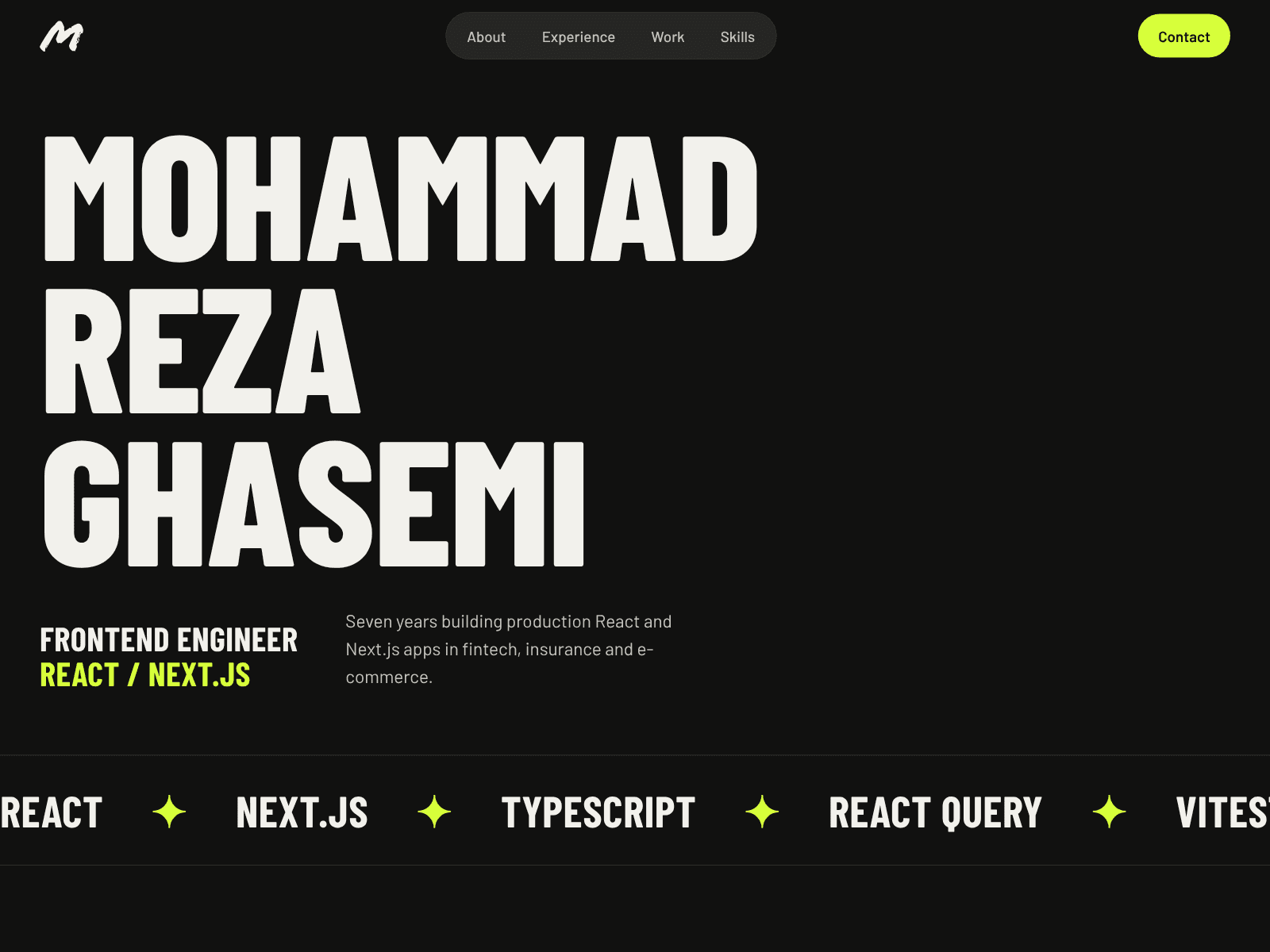
- The letters of the name drop in, then the name shrinks and fades as the page scrolls.
- The About text lights up line by line as it scrolls into view.
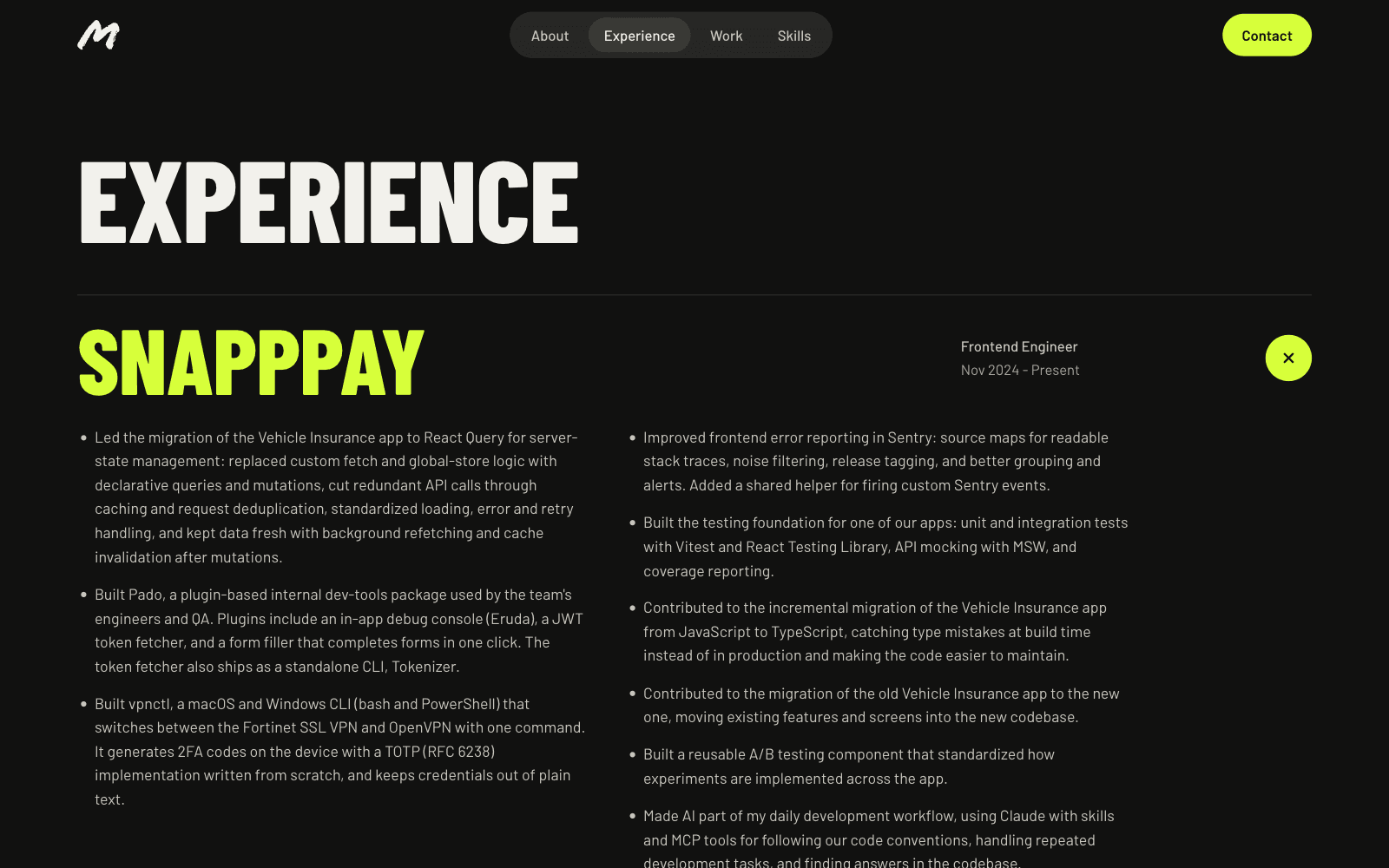
- Experience opens one job at a time, and the row you click stays where it is while the one above it closes.
- Work panels stack on top of each other, each sinking back as the next one covers it.
- Opening a case study slides the page and morphs the project's screenshot and title into place.
Search and sharing
- Each page has its own title, description and canonical URL.
- Social preview images are drawn in code for each page at build time.
- Structured data (WebSite, Person, CreativeWork, BreadcrumbList) linked by id, plus a sitemap and robots.txt.
- The years of experience are counted from the resume dates and go up by themselves, with a daily rebuild.
Accessibility
- Every animation turns off when the system's reduced-motion setting is on, and the page still looks finished.
- The mobile menu is a native dialog, which traps focus and closes on Escape. Experience rows are native details elements, usable by keyboard.
- Text split up for animation keeps a readable copy for screen readers.
- Contrast tuned even for the dimmed About words, and visible focus styles.
Screens
 (opens the full-size image)
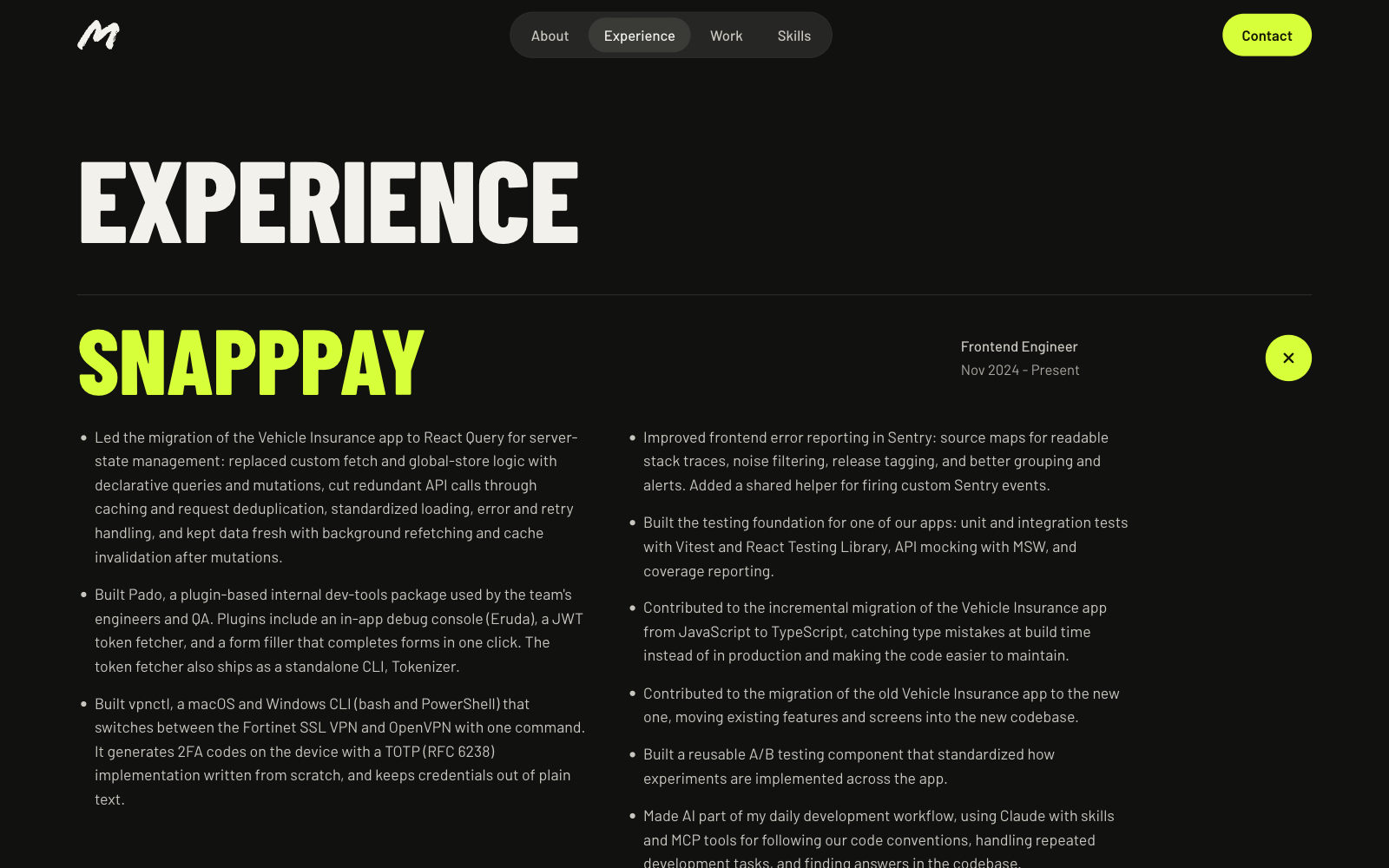
Experience lists each job as a big headline, with the current one open. 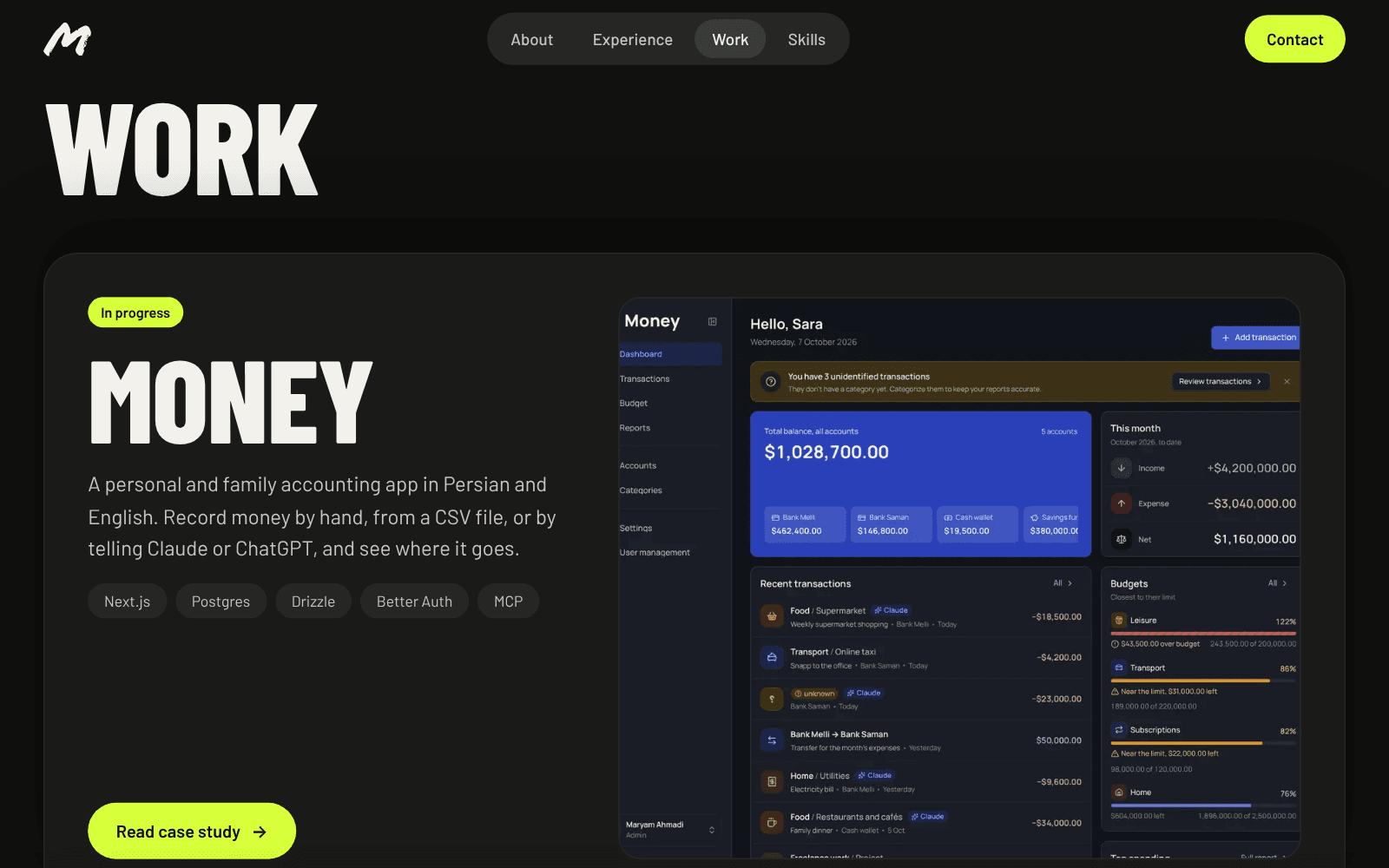 (opens the full-size image)
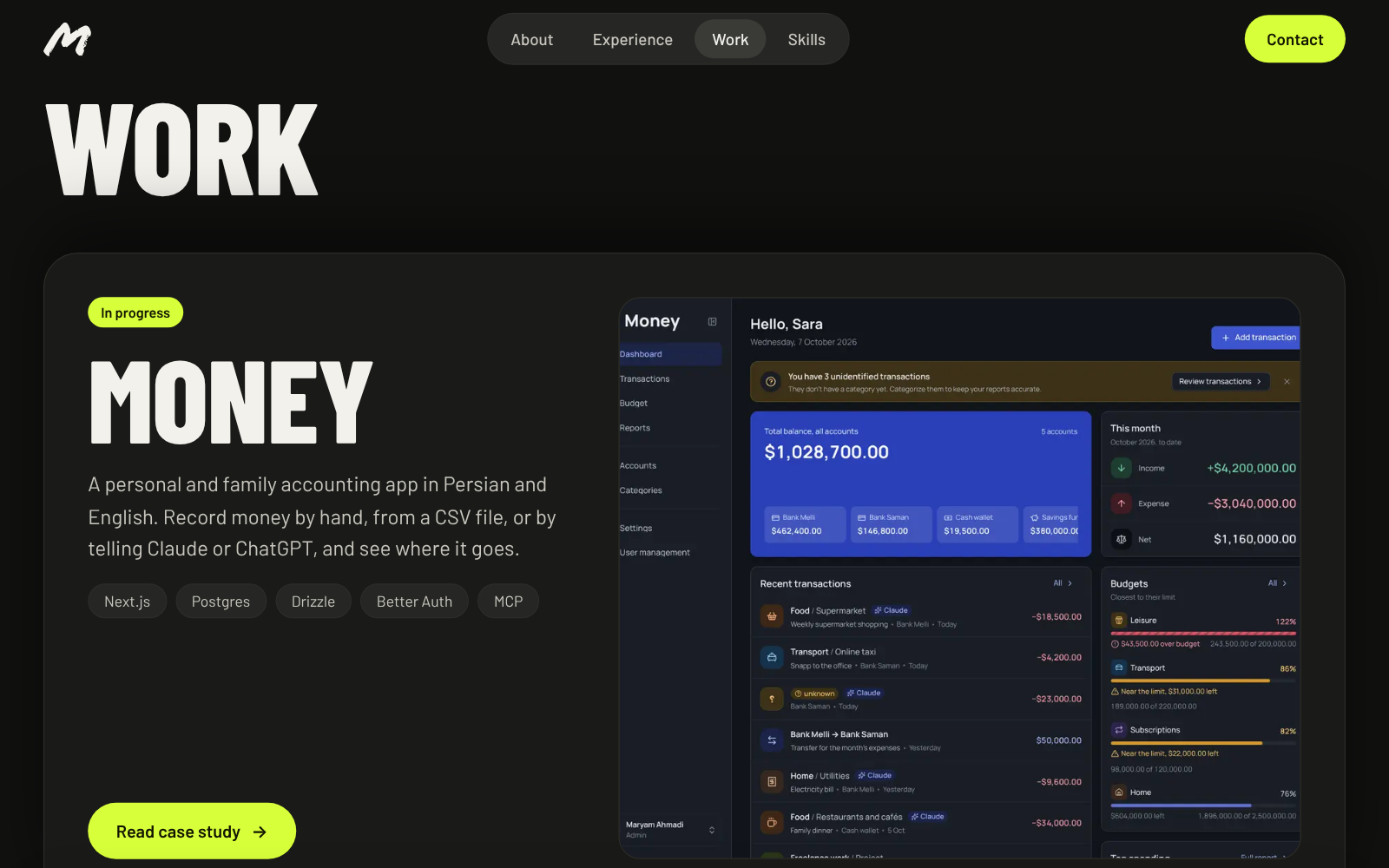
Work panels stack and sink back as the next one slides over. 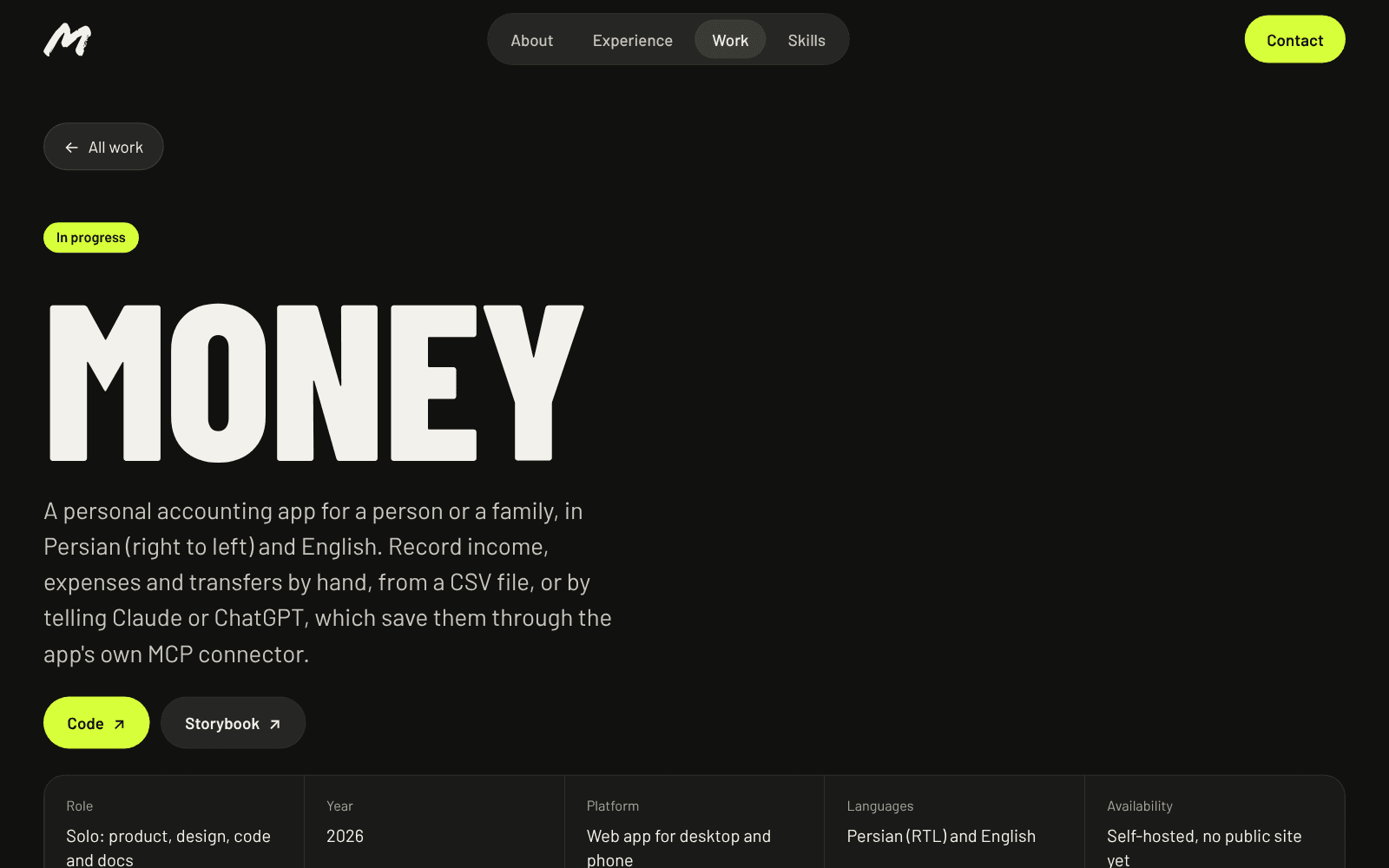 (opens the full-size image)
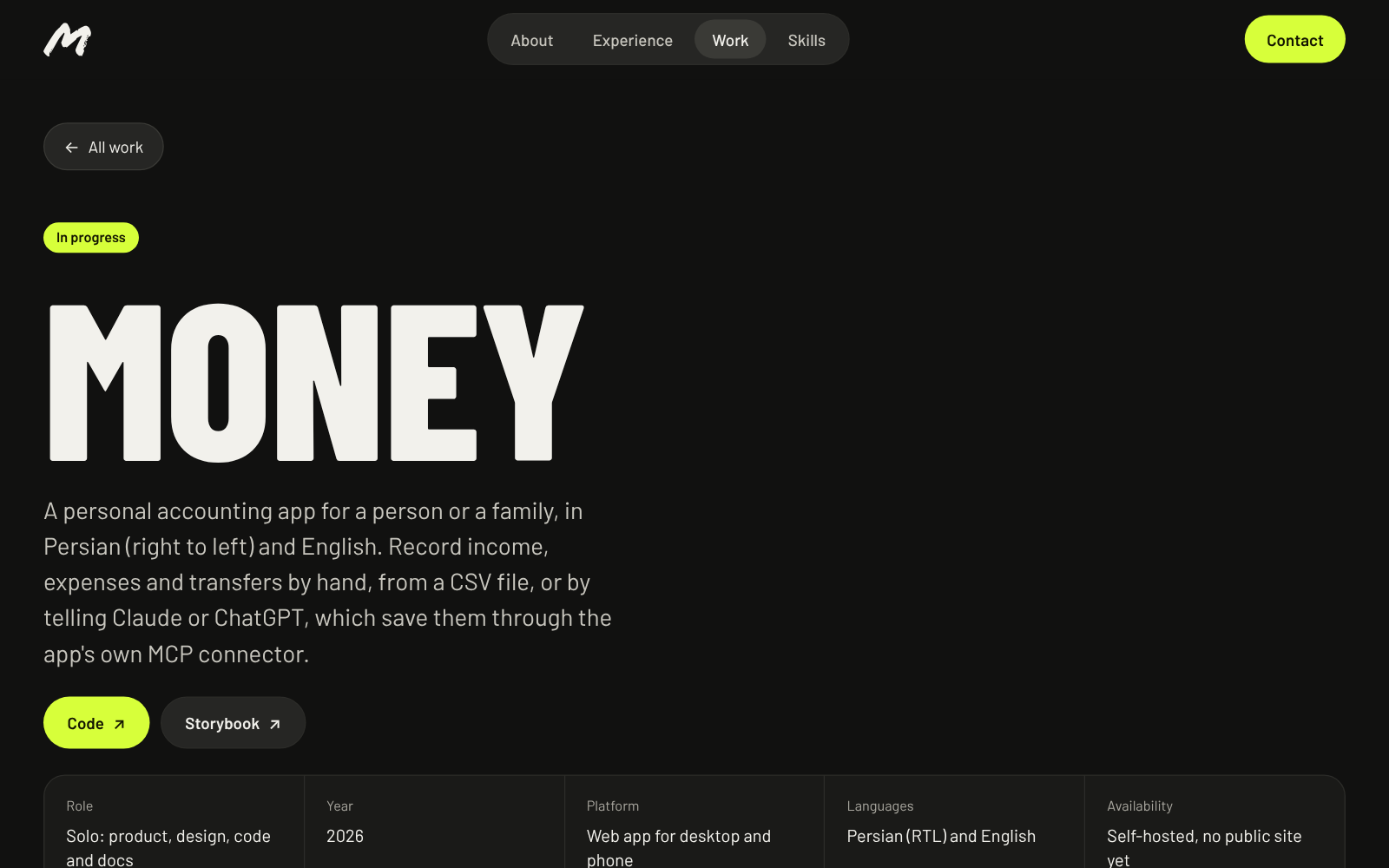
Each project gets a case study, built ahead of time from the same data. 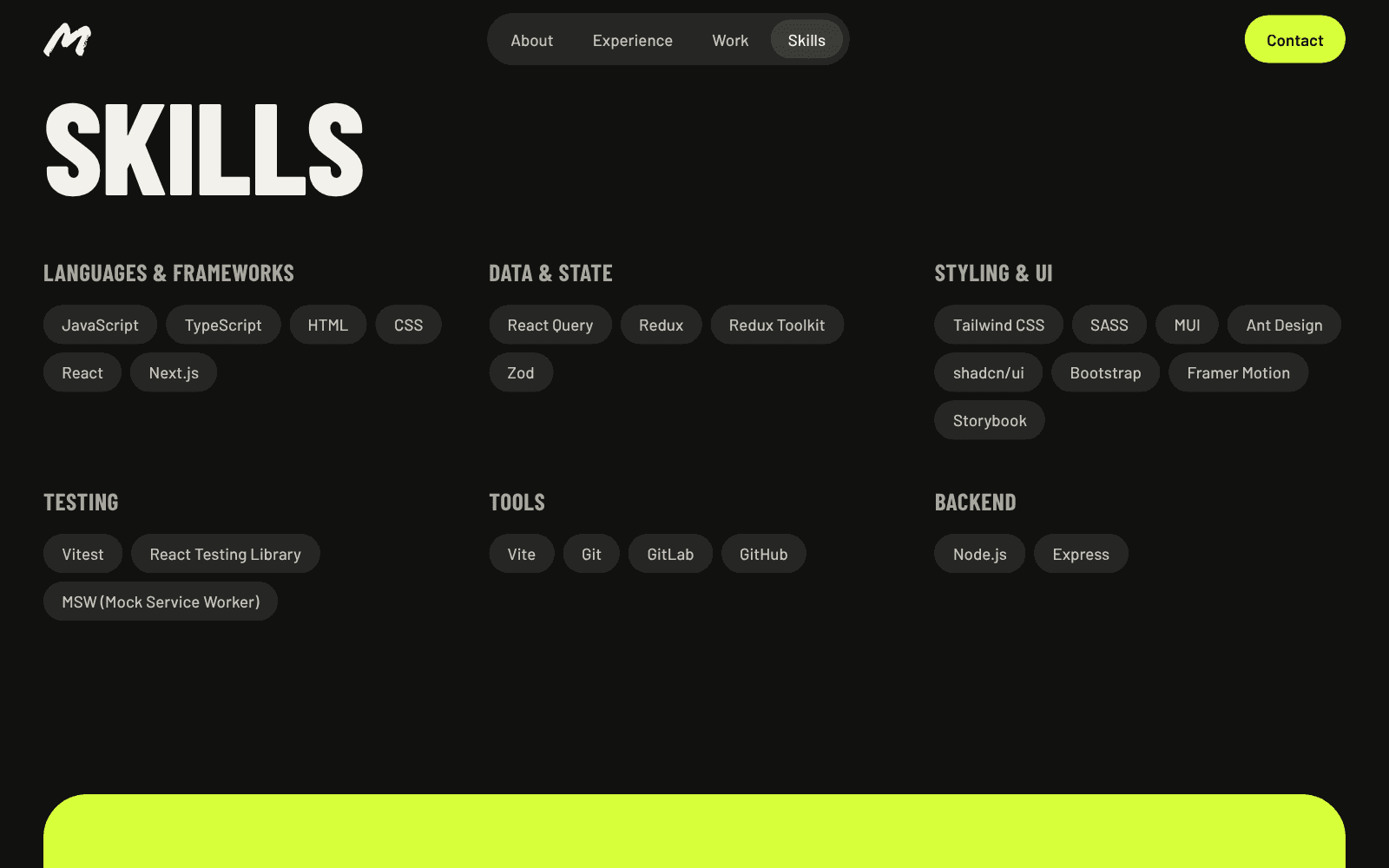 (opens the full-size image)
Skills as chips that rise in turn, then the contact block.
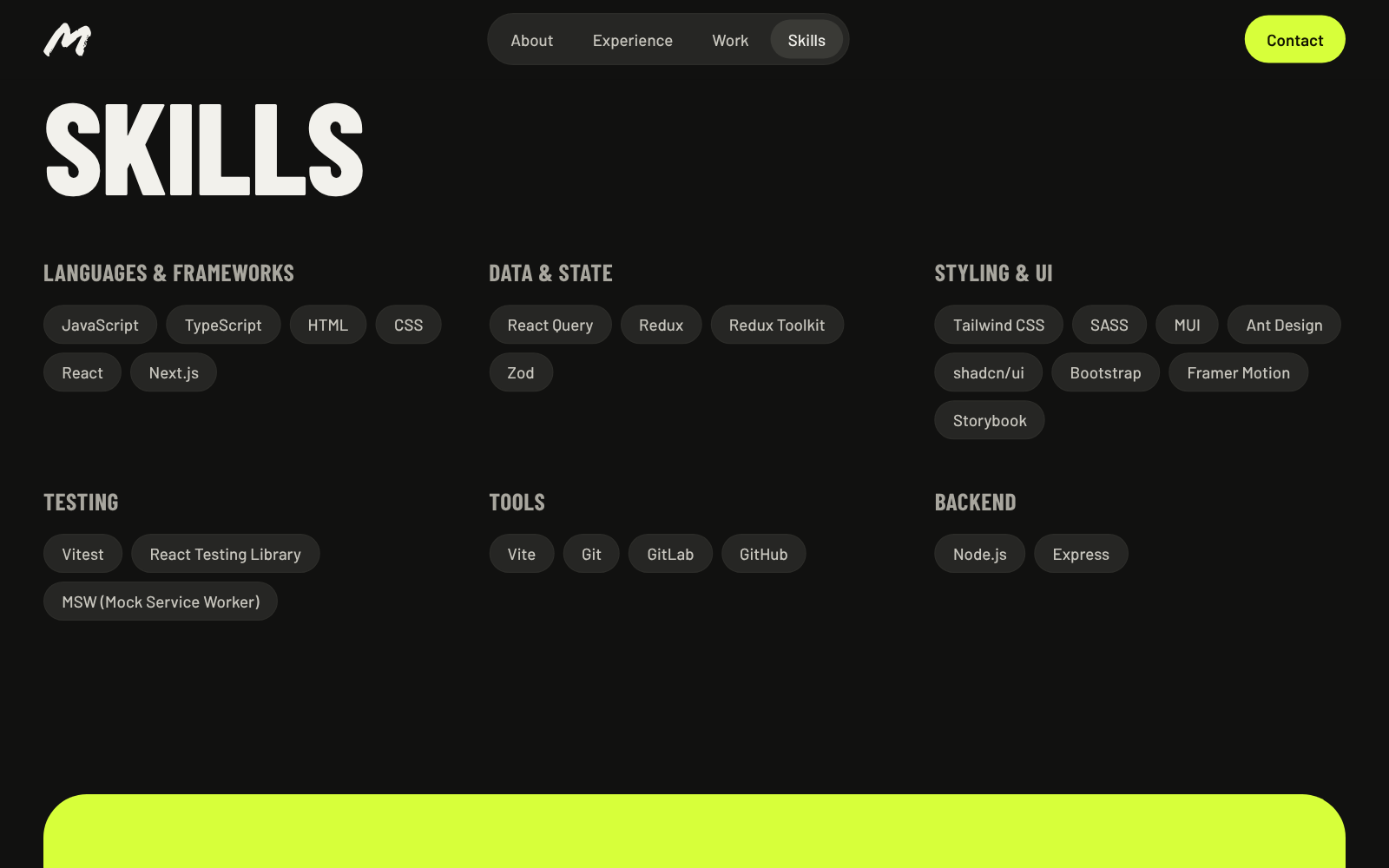
 (opens the full-size image)
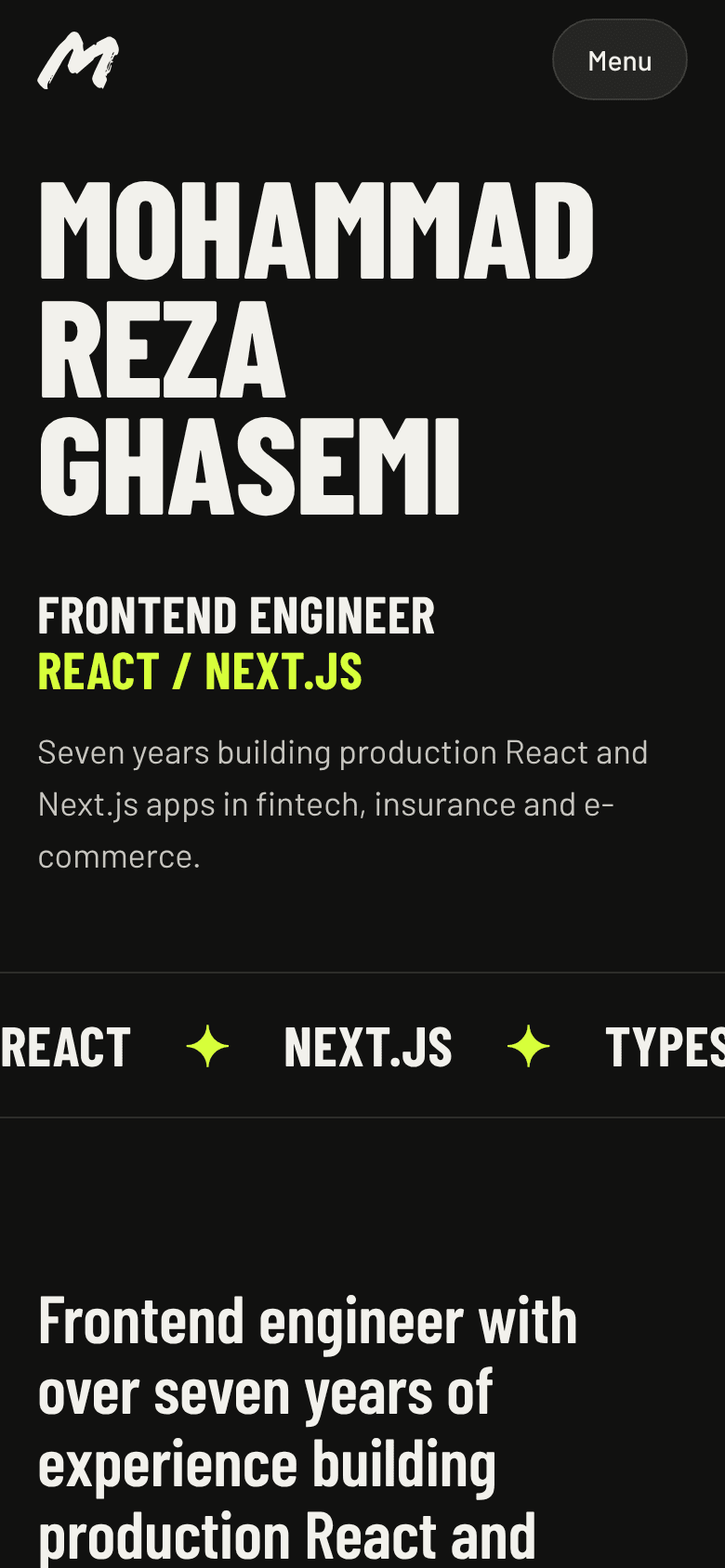
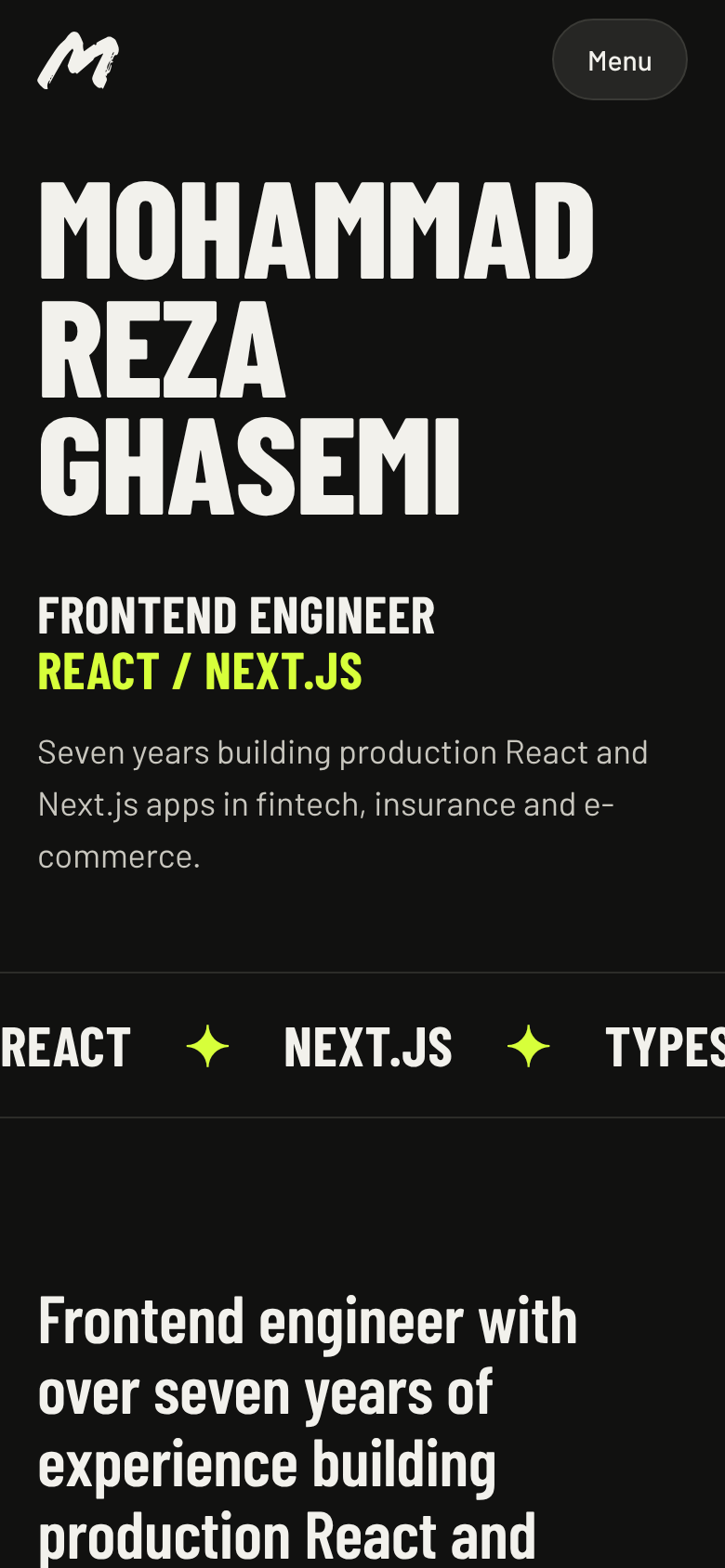
The hero on a phone. 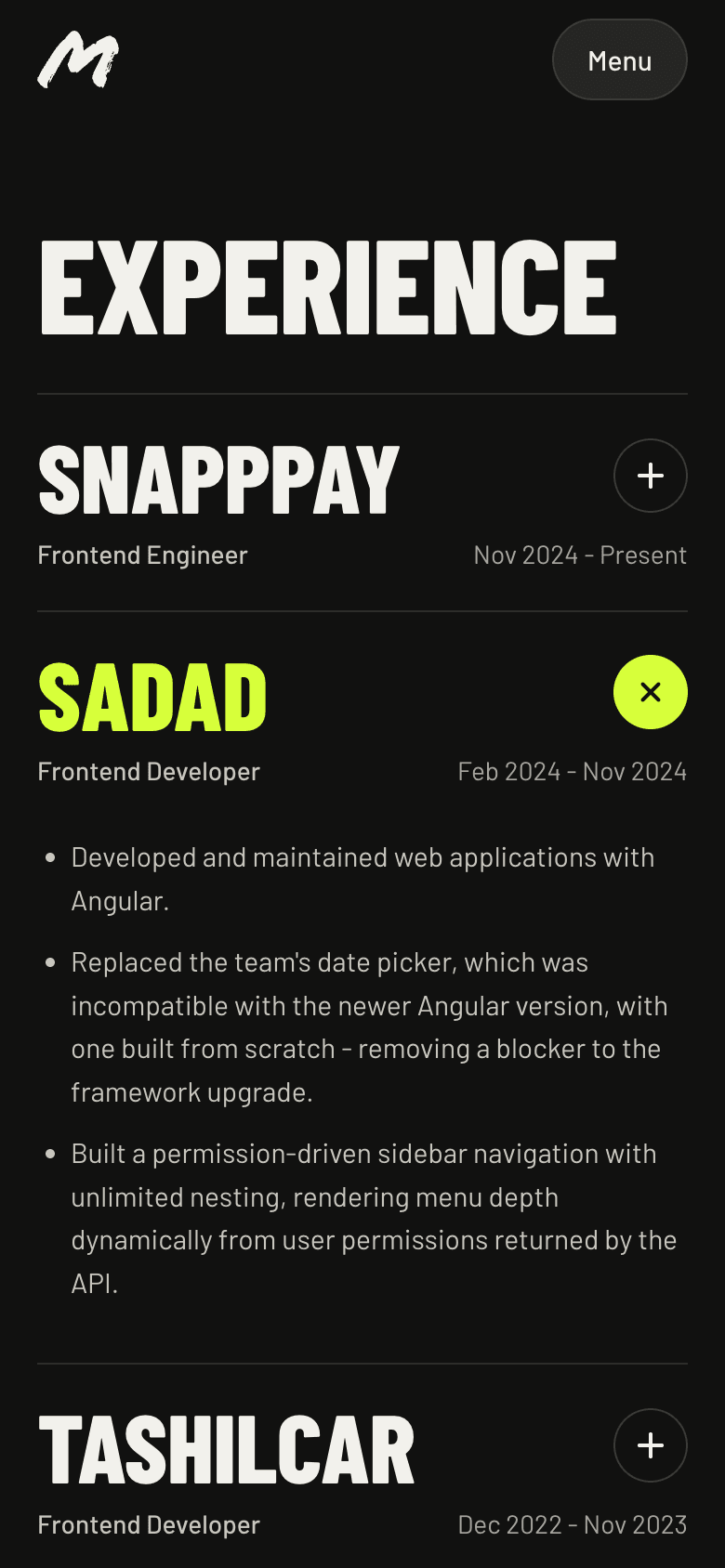 (opens the full-size image)
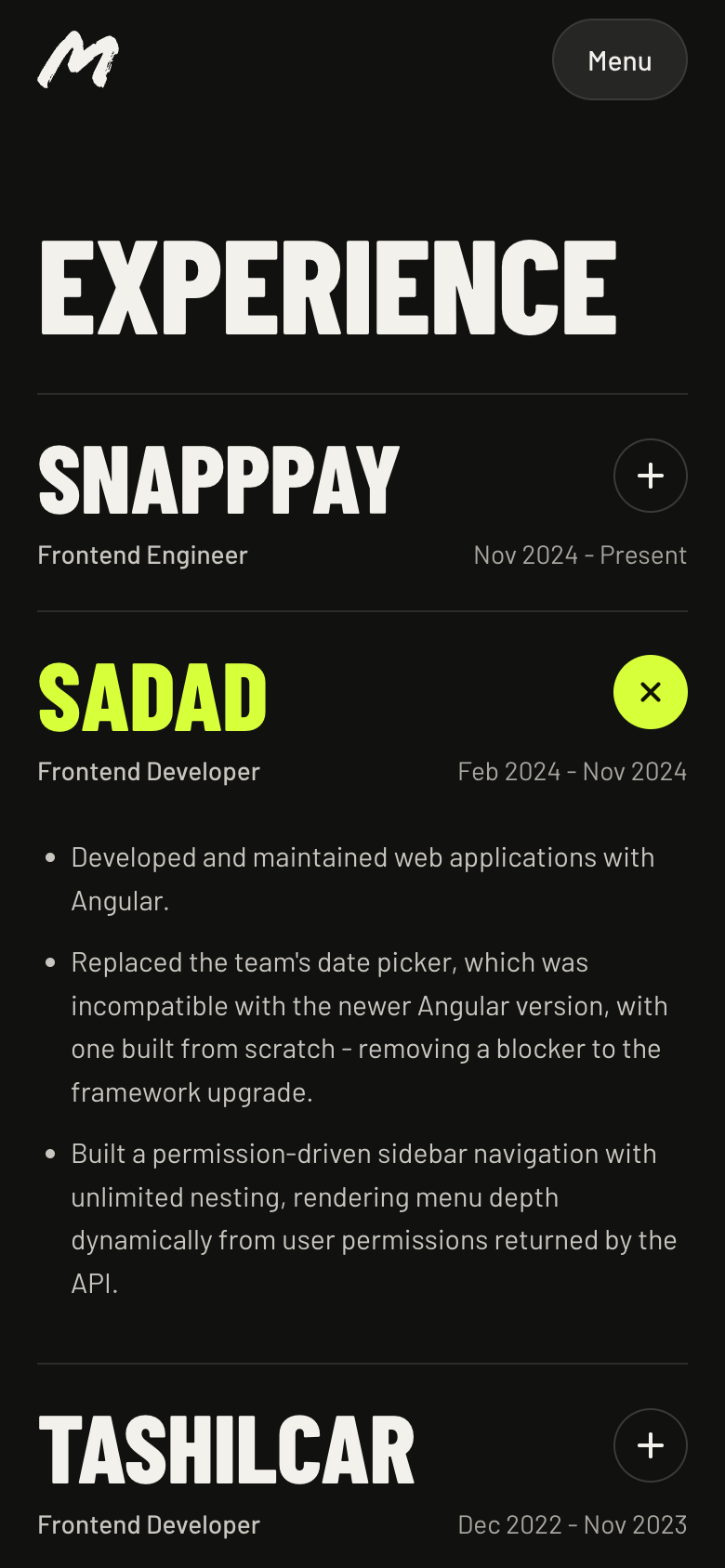
On phones, the same list, one job open at a time. 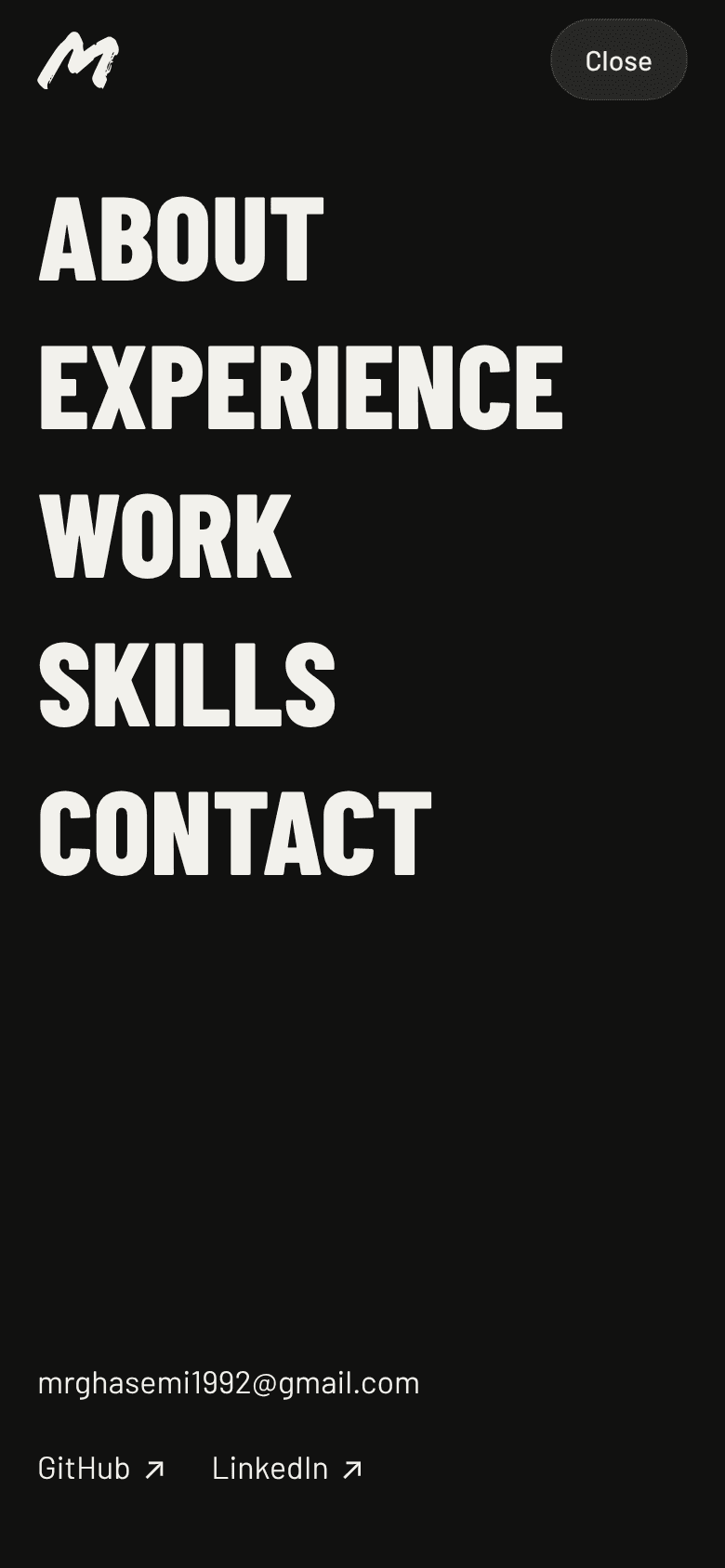 (opens the full-size image)
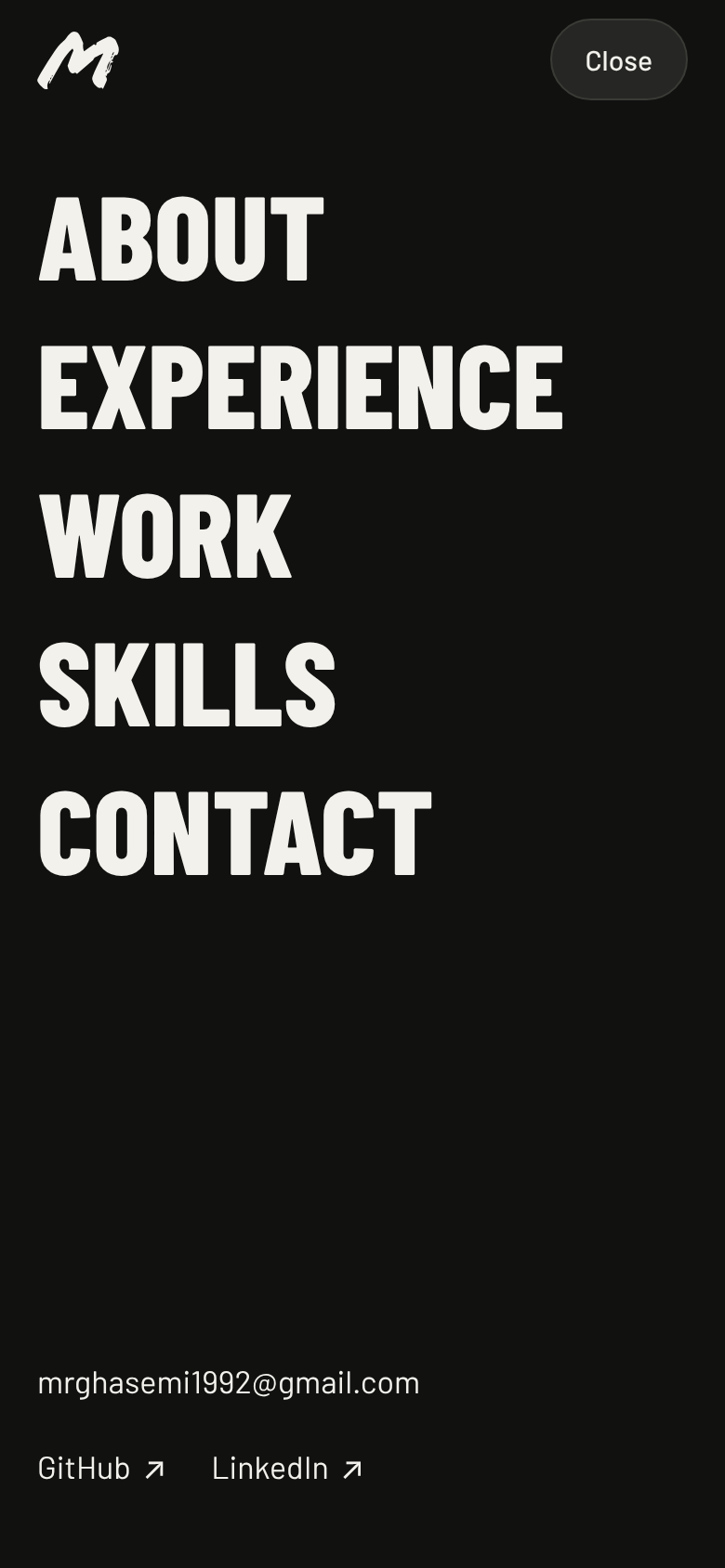
The mobile menu, a native dialog. 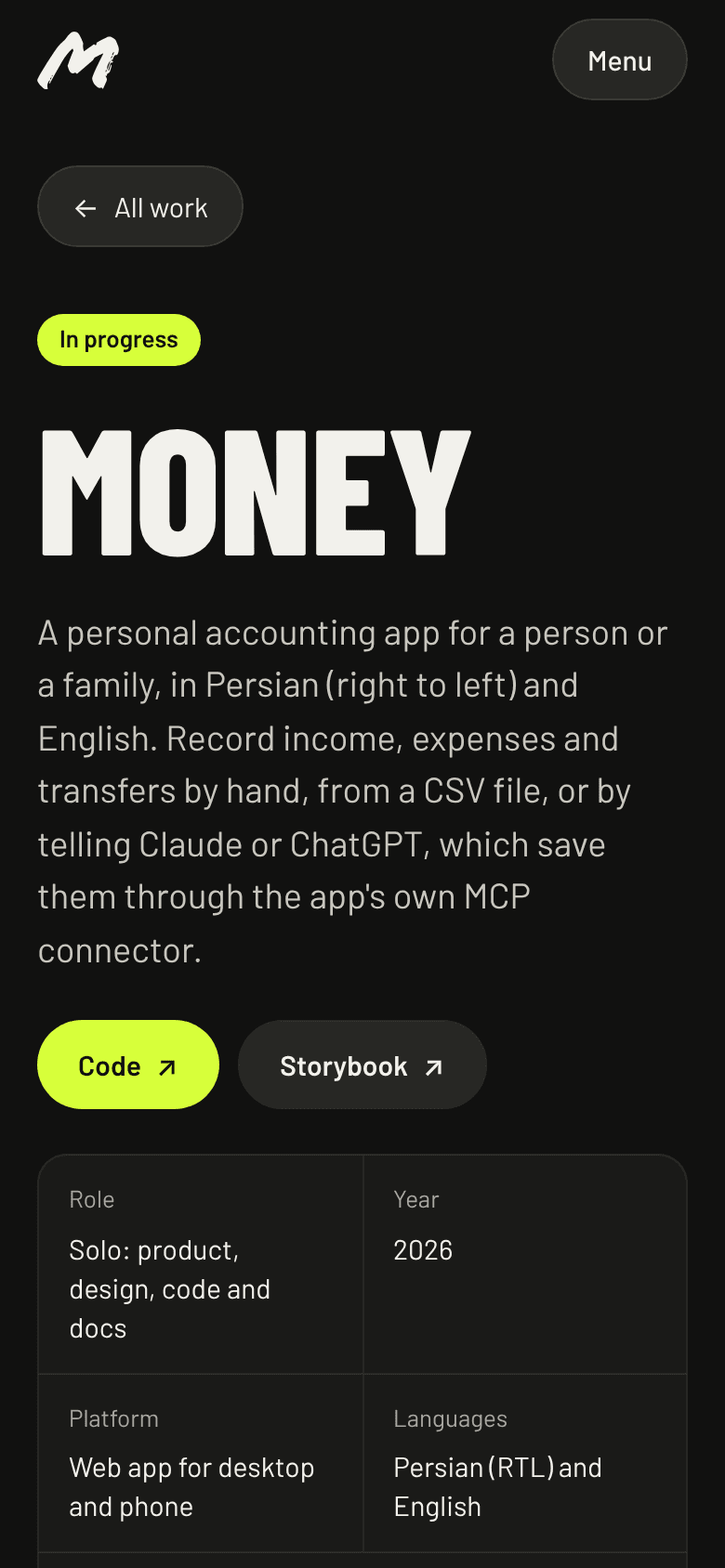 (opens the full-size image)
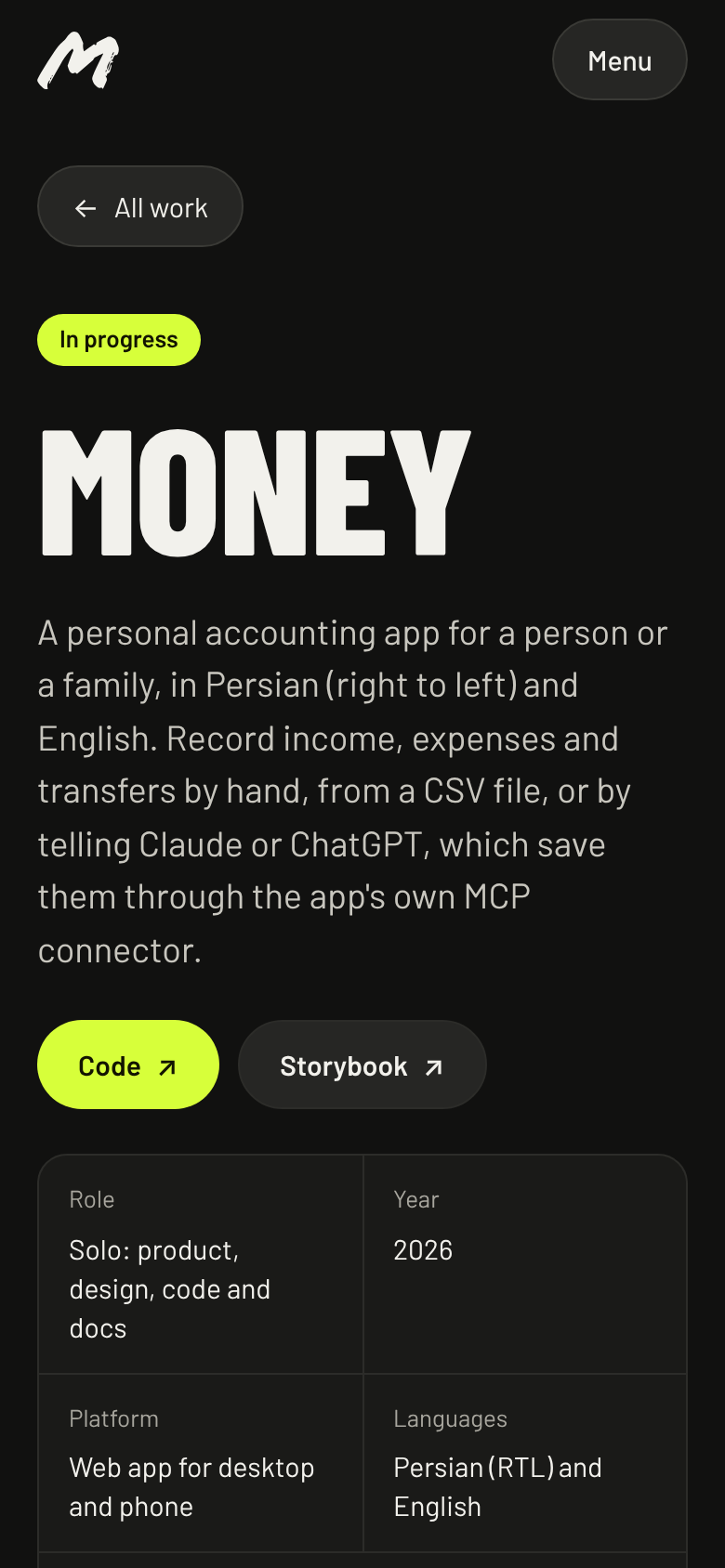
A case study on a phone.
Decisions
- Server Components by default. Only the mobile menu and a small helper that keeps an Experience row in place ship client-side JavaScript.
- All the text lives in one data file, so a copy change never touches a component.
- Scroll motion runs on CSS scroll-driven animations, with no animation library. It animates only transform and opacity, after phones dropped frames on anything else.
- Page changes use React's ViewTransition. Only the screen-sized root is animated, never the whole ~7,800px page, which stuttered on iPhones.
- The nav highlight slides between links with CSS anchor positioning, and falls back to a plain fill where it isn't supported.
- Pages are static and Vercel regenerates them once a day, which keeps the years of experience current without a deploy.
- Built with Claude Code, under written rules (CLAUDE.md) and a developer guide that are updated with every change.
Stack
- Next.js
- React
- TypeScript
- CSS Modules
- Scroll-driven animations
- View Transitions
- next/og
- Vercel